S Sewer Inspect Pros
Root Intrusion Inspection in Washington, DC
Washington, DC · 20001 Local camera techs

Root Intrusion Inspection in Washington, DC Near Me

See where roots enter your sewer in Washington, DC, how far they reach and which joints let them in. Call (844) 468-1966 to book a scope.

Recorded video footage
Defects logged by distance
Buyer and owner focused
Plain-language findings

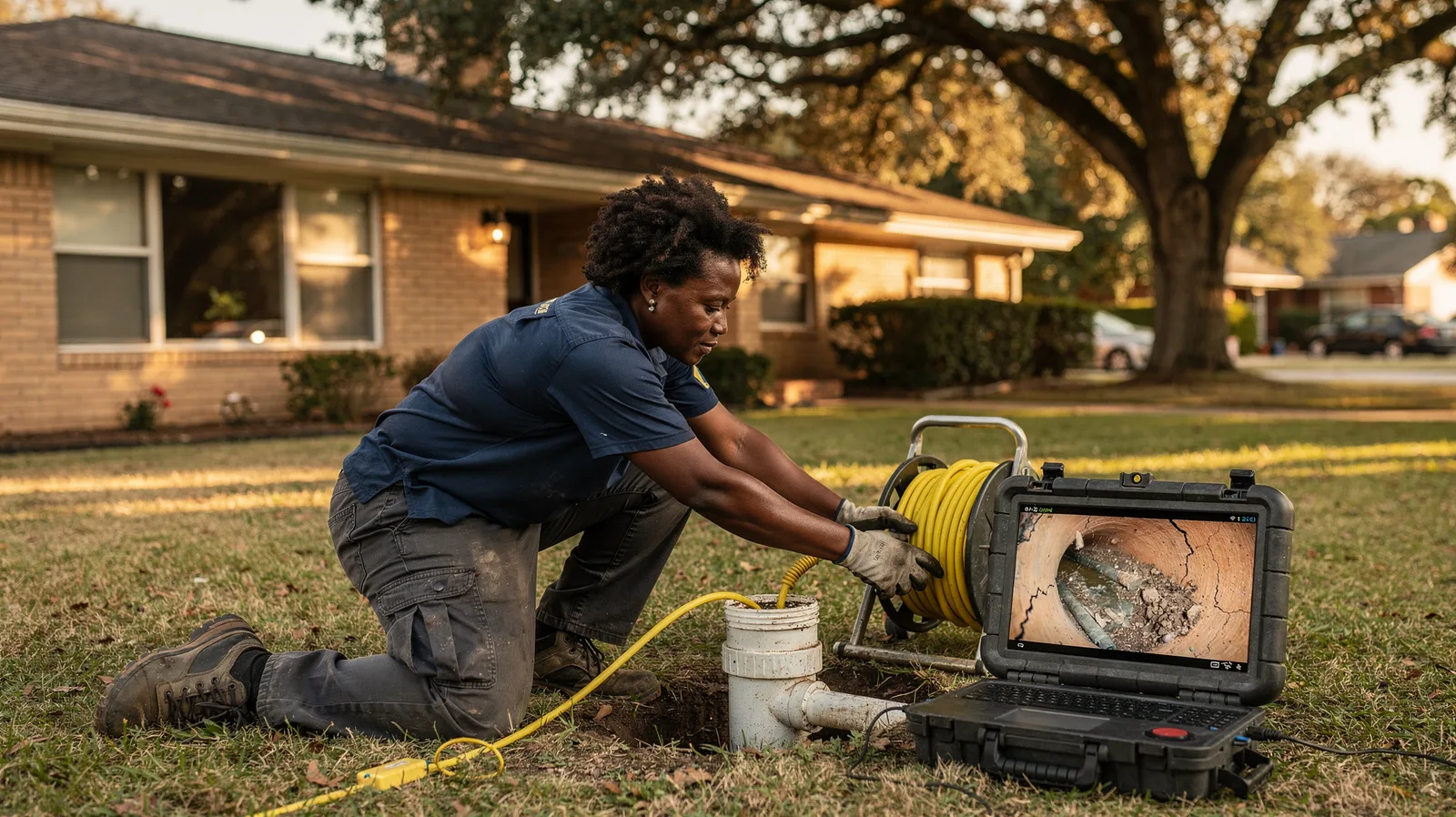
Tree roots do not break into a sound pipe on their own. They follow moisture leaking from joints and cracks, then grow through the gap. Inside, they spread into a fine mat that catches paper and grease until the line slows or stops.

How roots appear on camera

  • Hair roots: thin strands at a joint, often the first sign
  • Root curtain: a fringe hanging around the full circle of a joint
  • Root ball: a dense mass that fills most of the pipe
  • Structural damage: a joint pushed apart or a pipe wall split by root growth

The inspection notes the distance to each intrusion, so you can see whether it sits under a particular tree, a hedge or a neighbor's yard.

What the findings usually lead to

Light roots at one or two joints can often be cut or cleared, but they grow back because the opening is still there. Repeated intrusions at the same joint point toward a spot repair or a liner that seals the joints. If roots have broken the pipe, replacing that section is the usual answer. The footage lets you weigh those choices with real distances in hand.

Lowering the risk

Clay pipe laid in short sections has many joints, which is why older homes in Washington, DC see more root trouble. When planting, keep thirsty species such as willows and silver maples well away from the sewer route, and consider a follow-up scope a year or two after any root cutting.
How it works

Four simple steps to Sewer Camera Inspection in Washington, DC

01

Tell us about your job

Call (844) 468-1966 with the address, the age of the house and the reason you want the line scoped.

02

Access point chosen

The tech goes in through a cleanout, a pulled toilet or a roof vent, whichever reaches the main line best.

03

Camera run and recording

The camera travels toward the public main or septic tank while the footage records with a running distance count.

04

Job done right

You get the video and the notes, then decide whether the line needs attention, monitoring or nothing at all.

Coverage

Sewer Camera Inspection Services Across Washington, DC

Sewer camera inspections booked in cities and towns across Washington, DC.

ZIP codes we serve

20001 20002 20003 20004 20005 20006 20007 20008 20009 20010 20011 20012 20015 20016 20017 20018 20019 20020 20024 20032 20036 20037 20045 20052 20057 20059 20064 20204 20220 20230 20240 20245 20250 20260 20317 20319 20390 20408 20415 20418 20422 20427 20431 20510 20515 20520 20530 20535 20540 20542 20551 20560 20565 20566 20591
Root Intrusion Inspection in Washington, DC

Root Intrusion Inspection FAQs

Frequently asked questions about Root Intrusion Inspection

Questions we hear most often about Root Intrusion Inspection in Washington, DC.

Talk to a real person
What does a sewer camera inspection actually show?
It shows the inside of your main sewer line on video: the pipe material, the joints, and any roots, cracks, sags, offsets or debris, along with where the line meets the public main or septic tank. A distance counter records how far each problem sits from the access point, which helps anyone who later needs to dig or repair at that exact spot.
How long does a sewer scope take?
A typical residential scope takes about an hour, sometimes less. Extra time goes into finding or opening an access point, clearing a blockage so the camera can pass, or locating the line from above. Long laterals, commercial mains and lines with several branches take longer.
What is a belly in a sewer line?
A belly is a section of pipe that has sunk lower than the pipe on either side, usually because the soil underneath settled or washed out. On video it shows up as standing water that the camera dips into. Waste and paper collect in the low spot, so a line with a belly tends to clog again and again. Shallow bellies may only need monitoring; deep ones often need the section re-laid.
What is Orangeburg pipe, and why do inspectors flag it?
Orangeburg is a fiber pipe made from wood pulp and coal tar pitch, installed widely from the 1940s into the 1970s. After a few decades underground it starts to soften, blister and flatten under the weight of the soil, and on camera it often looks oval. Because it keeps deforming, most owners plan to replace it rather than patch it.
Who is responsible for the sewer line between my house and the street?
In most U.S. cities the homeowner owns the lateral from the house to at least the property line, and often all the way to the connection at the public main, including the part under the street. Rules differ from city to city. Check with the public works department that serves Washington, DC before you approve repairs, so you know which section is yours.

Buying a house?

Need Sewer Camera Inspection in Washington, DC? Call now.

Buying a house, chasing a backup that keeps coming back or weighing a repair bid? Call (844) 468-1966 and we will book a sewer camera inspection with a local tech.

Call (844) 468-1966 Services